The Art of the 48-Hour Trip
How to go farther, experience more, and turn an ordinary weekend into something memorable.
By Christopher Cockrum, Éto Travel Advisor
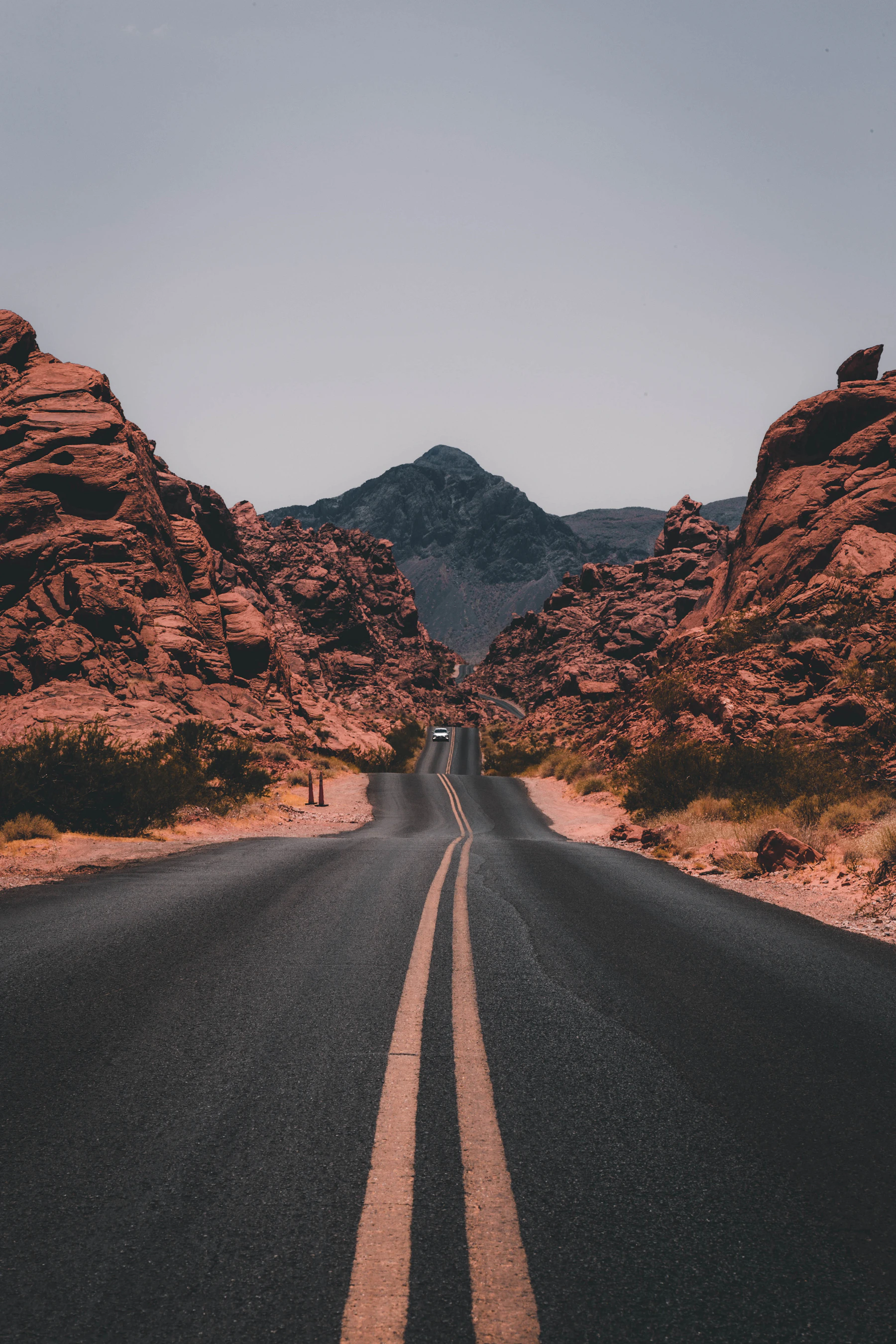
There is a tendency to think of travel in weeks. A proper vacation needs seven days. An international trip needs ten. A weekend is for somewhere nearby, somewhere easy, somewhere that requires very little imagination.
That assumption leaves an enormous amount of travel on the table.
Forty-eight hours can be enough to encounter a new city, eat exceptionally well, spend an afternoon inside a great museum, wander somewhere unfamiliar after dark, wake up somewhere that does not look like home, and return with the peculiar feeling that you have been gone much longer than a weekend.
The trick is not trying to compress a weeklong vacation into two days. It is designing a different kind of trip entirely.
Think in experience, not distance
The closest destination is not automatically the best destination for a short trip.
A town two hours away may technically be convenient, but convenience has little value if there is not enough there that genuinely excites you. Meanwhile, a city five or six hours away may offer a museum you have wanted to see for years, an extraordinary restaurant, a neighborhood worth spending an afternoon exploring, and enough novelty to make the weekend feel completely removed from ordinary life.
The useful question is not simply, 'How far away is it?' The better question is, 'What do I get in exchange for the time it takes to reach it?'
That is the basic economics of the 48-hour trip. Travel time is an investment. The destination needs to justify it.
A short trip should optimize experience value, not simply minimize travel time.
Know your travel-time tolerance
Everyone has a different threshold for what feels reasonable. For one traveler, four hours in a car is exhausting. For another, eight hours with coffee, music, and an open highway is part of the experience.
Your personal tolerance matters more than an arbitrary rule about how far someone should travel for a weekend.
Still, the ratio matters. If you have only 24 hours, spending twelve of them in transit is difficult to justify. With 48 hours, a longer drive becomes much more reasonable. Add a third night and the radius expands again.
Flights work differently. A two-hour flight rarely costs only two hours. Getting to the airport, arriving early, security, boarding, baggage, ground transportation, and the possibility of delays all belong in the calculation.
A destination that appears farther away by car can sometimes involve less friction than a theoretically faster flight.
Leave before the weekend begins
One of the most powerful ways to make a short trip feel longer is to stop treating Saturday morning as the beginning.
If circumstances allow, leave Friday after work. Drive into the evening. Take the late flight. Arrive tired if necessary.
The objective is simple: wake up Saturday already there.
That single decision changes the geometry of the weekend. Saturday morning is no longer consumed by packing, driving, airports, or checking in. You open your eyes inside the trip.
For driving trips, this can be especially effective. Even covering part of the distance Friday night and staying somewhere inexpensive along the route can dramatically expand the usable portion of Saturday.
The most valuable hour of a weekend trip may be the one that gets you out of town on Friday night.
Choose one reason to go
Short trips become exhausting when they are built around completeness.
You do not need to see everything.
Instead, give the trip an anchor. Perhaps it is a major exhibition. Perhaps it is a restaurant reservation. It might be a trail, an architectural landmark, a concert, a historic district, a wildlife refuge, or simply a neighborhood you have wanted to photograph.
Once you have the anchor, build outward from it.
A trip to Bentonville might begin with Crystal Bridges. Kansas City could revolve around the Nelson-Atkins and an evening in the Crossroads. Santa Fe might begin with art and food. Another trip could exist almost entirely because there is a landscape you want to stand inside.
One compelling reason is enough. Everything else can support it.
Build for experience density
The best short-trip destinations allow several good experiences to exist close together.
This is experience density. A neighborhood where you can walk from breakfast to a museum, spend the afternoon browsing shops and galleries, have dinner nearby, and finish the night at a small bar has enormous value on a 48-hour trip.
By contrast, a destination where every activity requires forty-five minutes of driving introduces friction into an already compressed schedule.
This does not mean every moment should be scheduled. In fact, the opposite is often true. High experience density allows you to schedule less because interesting things naturally appear between the things you planned.
Stay where the trip is happening
A cheap hotel on the edge of town can become surprisingly expensive when measured in time.
On a longer trip, a twenty-five minute drive to the center may be insignificant. On a weekend, repeating that journey several times can consume a meaningful portion of the experience.
Location deserves more weight on short trips. A modest hotel, guesthouse, or apartment in the right neighborhood can be more valuable than a more luxurious property far from everything you want to do.
The ideal lodging lets you step outside and immediately continue the trip.
Spend unevenly
A memorable weekend does not require luxury at every step.
One of the most useful strategies is deliberate imbalance.
Stay somewhere simple and spend more on dinner. Eat inexpensively most of the day and book one remarkable meal. Use public transportation so you can afford tickets to an exhibition or performance. Skip the premium room if you are going to spend most of your waking hours outside it.
The goal is not to make every component equally good. The goal is to spend where money meaningfully changes the experience.
This is particularly powerful in cities where excellent inexpensive food, public spaces, museums, markets, trails, or neighborhoods already provide much of the trip's value.
Do not distribute your budget evenly. Spend where spending changes the story.
Do less on purpose
A 48-hour itinerary should have empty space.
That can feel counterintuitive. When time is limited, the instinct is to maximize every hour. Breakfast at eight. Museum at nine. Lunch at noon. Attraction at one. Shopping at three. Dinner at six. Drinks at eight.
That schedule may be efficient, but efficiency is not the same thing as travel.
Leave room to walk. Leave room to discover a bookstore you did not know existed. Leave room to stay another hour at the museum because one gallery surprised you. Leave room for the bartender to tell you where to eat tomorrow.
A short trip feels expansive when you have enough structure to prevent wasted time and enough freedom to allow something unexpected to happen.
Let food organize the day
Meals are particularly useful anchors on short trips because they naturally divide the day.
Choose breakfast near the first neighborhood you want to explore. Let lunch occur near the day's primary activity. Make dinner the transition into the evening.
This reduces unnecessary movement while making food part of the geography of the trip.
Dietary preferences should shape this planning rather than being treated as an afterthought. Vegetarian, vegan, pescatarian, gluten-free, and other requirements can influence which neighborhoods or destinations offer the strongest overall experience.
The best itinerary does not merely find somewhere you can eat. It finds somewhere you will be excited to eat.
Protect Sunday
Sunday is where many weekend trips collapse.
Travelers either leave so early that half the trip disappears or stay so late that Monday becomes miserable.
The answer depends on the distance home, but Sunday should usually contain one intentional experience rather than becoming a collection of leftovers.
Have a great breakfast. Visit one place. Take one walk. Eat an early lunch. Then leave.
Knowing the approximate departure time in advance removes the low-level anxiety of constantly wondering when you should start heading home.
The 48-hour framework
There is no universal itinerary, but a useful pattern emerges.
Friday is for movement. Get as much transportation out of the way as practical and arrive with as few obligations as possible.
Saturday is the heart of the trip. Give it one major anchor, one excellent meal, and enough unstructured time to actually encounter the destination.
Sunday is for one final experience followed by a deliberate return home.
That structure is simple, but simplicity is precisely what makes it work. The destination supplies the complexity.
When the ambitious trip is worth it
Sometimes the mathematically sensible destination is not the one you should choose.
There are weekends when driving seven hours for one extraordinary exhibition makes perfect sense. There are moments when an inexpensive flight somewhere completely different is worth the airport hassle. There are trips whose apparent inefficiency is precisely what makes them memorable.
The important distinction is between inconvenience with a payoff and inconvenience without one.
If the destination gives you something difficult to find closer to home, the additional effort may be justified. If you are traveling farther simply because farther feels more impressive, it probably is not.
A weekend can be a real journey
Travel does not become meaningful at a particular number of nights.
Sometimes the most memorable journeys happen precisely because time is limited. You pay closer attention. You make decisions. You stop assuming you can come back tomorrow.
A 48-hour trip asks a useful question: if you cannot have everything, what is actually worth going for?
Answer that well, and an ordinary weekend can become something much larger.
Éto Express
You have the weekend.
Where should you go?
Tell Éto where you are starting, how much time you have, what you want to spend, and what makes a trip worthwhile to you.
Find My Best Escape
