01
1 Night
Zürich
Arrival, rail-pass setup, luggage strategy, and a gentle introduction to Switzerland’s remarkably integrated public transport network.
ÉTO Signature Journey
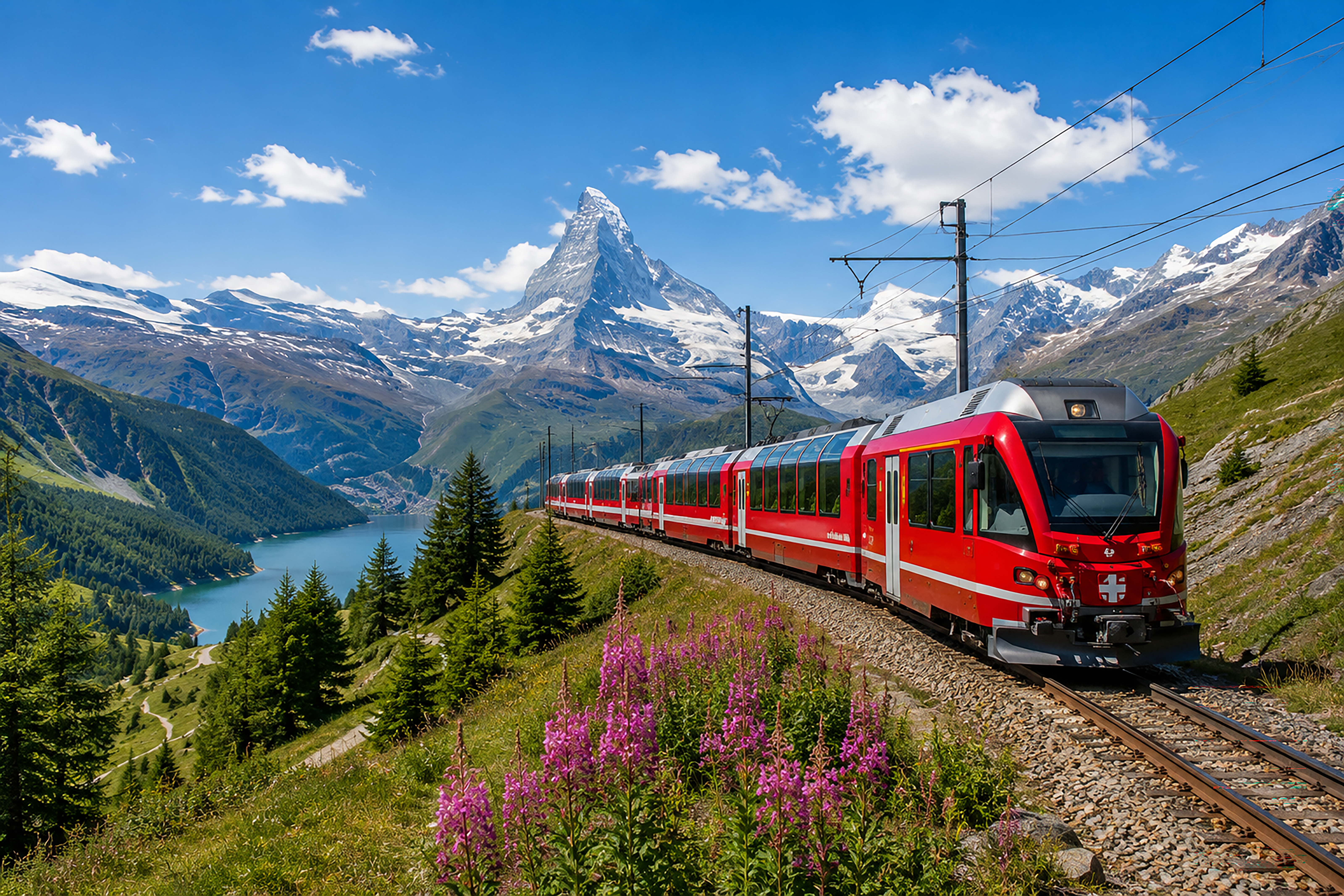
Cross the Swiss Alps by rail through mountain passes, lakeside towns, historic routes, and some of Europe's most extraordinary landscapes.
Trip Length
14 Days
Best Time
May–October for the broadest panoramic-route access
Pace
Balanced
Style
Scenic rail journey
Why This Journey
This journey treats the railway itself as part of the destination. Rather than using trains simply to move between cities, the route is built around panoramic lines, mountain railways, lake connections, engineering landmarks, and the changing landscapes visible from the carriage window.
The Route
01
1 Night
Arrival, rail-pass setup, luggage strategy, and a gentle introduction to Switzerland’s remarkably integrated public transport network.
02
2 Nights
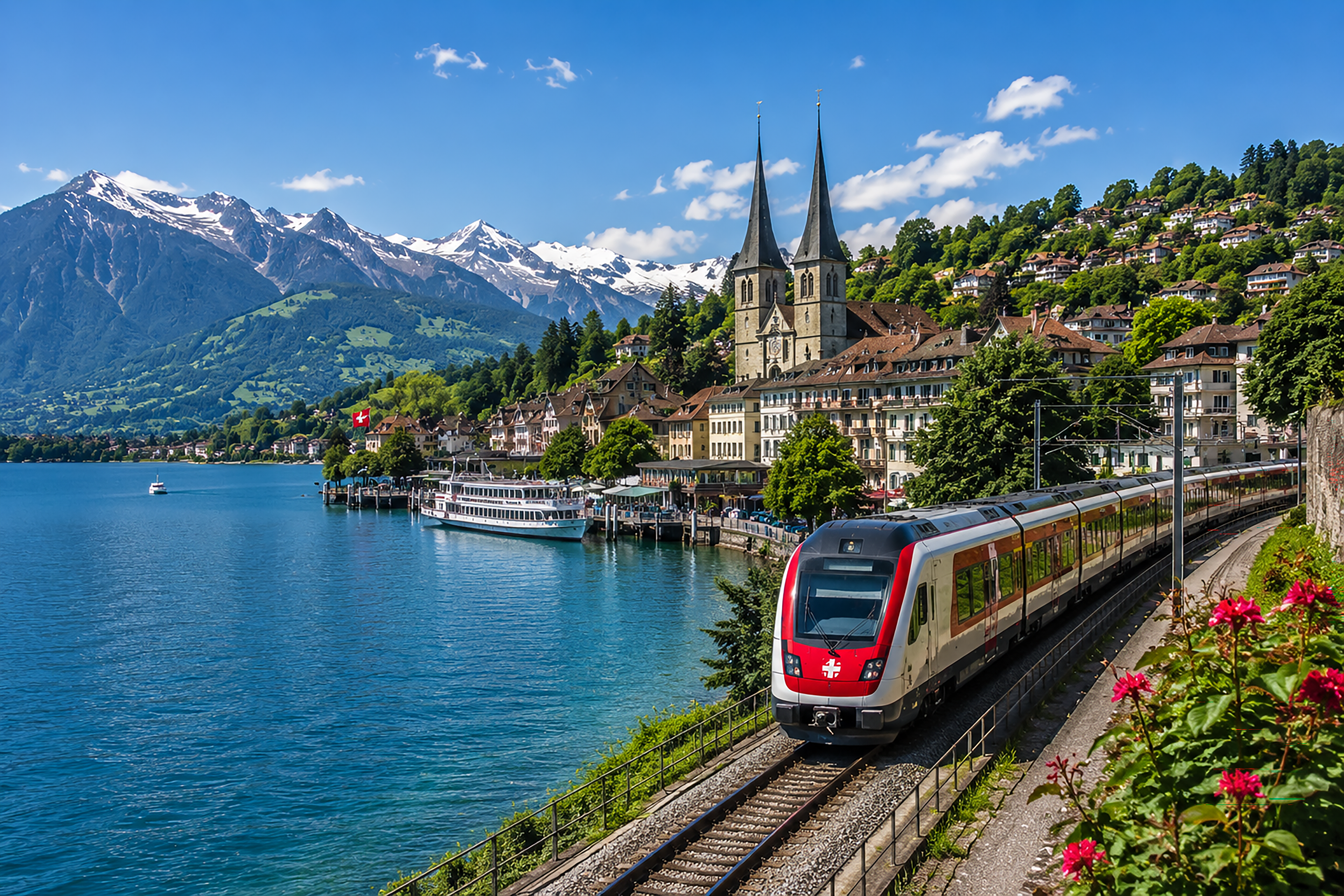
Lake travel, historic streets, mountain excursions, and the beginning of the panoramic rail sequence.
03
2 Nights
A central base between lakes and mountains, connecting the Lucerne–Interlaken route with the Bernese Oberland.
04
2 Nights
Arrive via the GoldenPass corridor into vineyards, Lake Geneva, and a distinctly different western Swiss landscape.
05
2 Nights
Matterhorn views, mountain railways, car-free streets, and the western terminus of the Glacier Express.
06
2 Nights
Complete the Glacier Express and explore the Engadin before continuing toward the Bernina route.
07
2 Nights
Finish in Ticino with Mediterranean-influenced architecture, lakeside landscapes, and a final contrast to the high Alps.
08
1 Night
Return north by the Gotthard corridor and conclude the journey with an easy departure connection.
Taste the Seasons
Snow, daylight, mountain access, lake travel, high passes, and panoramic services shift throughout the year. Choosing when to travel changes both what you see and which rail experiences are available.
ÉTO Preferred Window
May–October for the broadest panoramic-route access
April — May
Fresh, transitional, dramatic
Lower valleys turn green while snow remains high in the Alps. Waterfalls strengthen, mountain weather changes quickly, and some high-elevation excursions may still be seasonal.
June — August
Open, bright, expansive
Long daylight, reliable mountain access, lake travel, and open high passes make summer the easiest season for the complete rail journey.
September — October
Golden, quieter, atmospheric
Lower-angle light, changing vegetation, cooler air, and fewer visitors make early autumn especially rewarding for scenic rail travel.
November — March
Snowbound, intimate, cinematic
Snow transforms the rail experience, especially on alpine lines, but some panoramic services operate on reduced or seasonal schedules and daylight is limited.
Landscape Photography & Fieldcraft
Weather, light, wind, cloud, water, scale, and changing road conditions shape the strongest images. Slow down, scout carefully, return when the light changes, and treat the landscape with respect.
Visual Guide
Boats, railway platforms, lake reflections, mountains, and the visual relationship between city and landscape.
Best light
Early morning and late afternoon.
Timing
Photograph before commuter and tour traffic becomes heavy.
Field note
Look for layered compositions rather than photographing only the obvious skyline.
Visual Guide
Mountain villages, pasture, railway curves, vineyards, and changing landscapes viewed from the train.
Best light
Soft morning or afternoon light when reflections on the glass are manageable.
Timing
Keep the camera ready before major scenic sections rather than retrieving equipment after the view appears.
Field note
Wear dark clothing near panoramic windows to reduce reflections.
Visual Guide
Mountain railway infrastructure, alpine terrain, villages, glaciers, and the Matterhorn.
Best light
Early morning when visibility is often strongest.
Timing
Check mountain conditions before committing to a high-elevation excursion.
Field note
Weather matters more than a rigid reservation-free sightseeing sequence.
Visual Guide
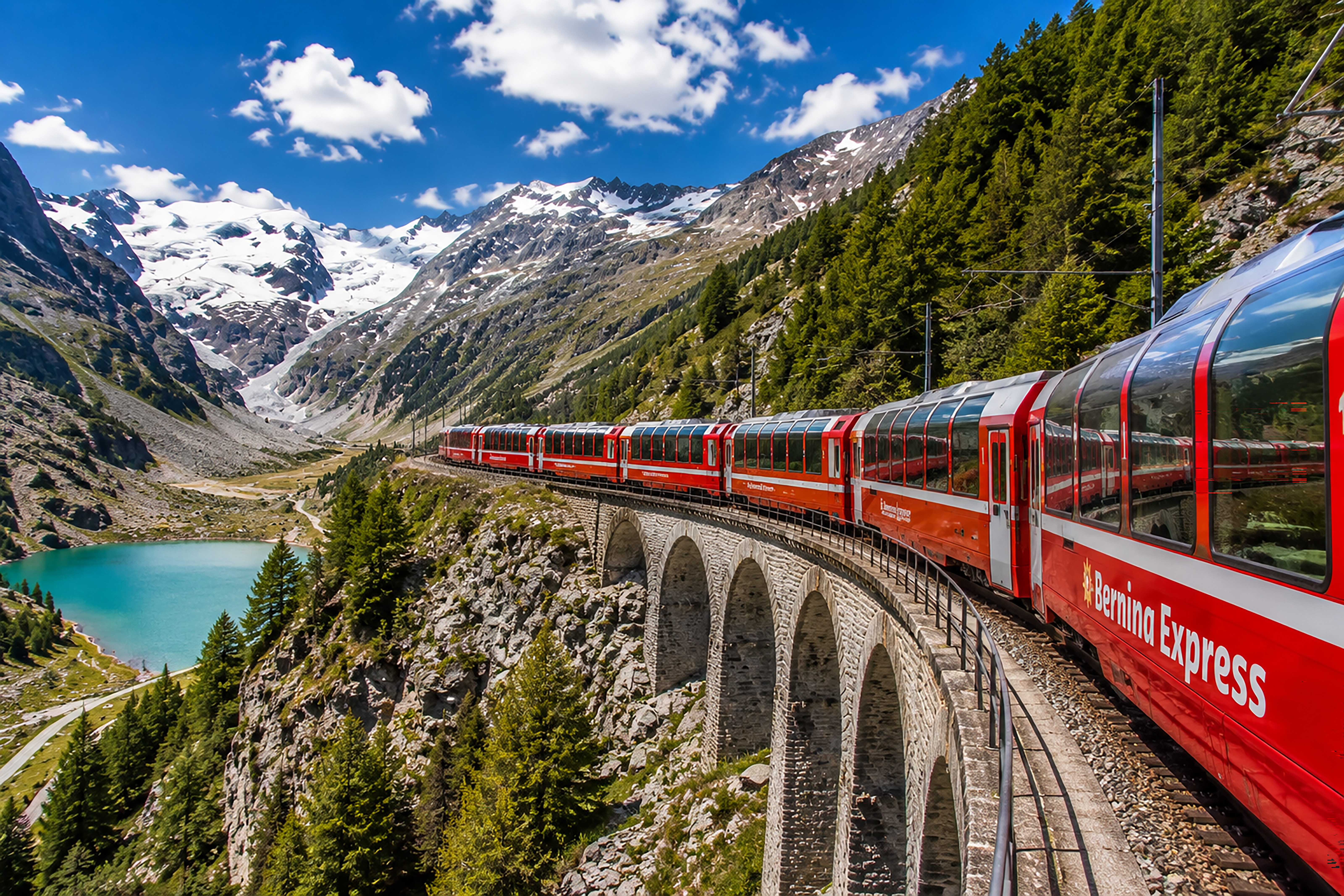
Viaducts, tunnels, gorges, railway curves, rivers, and high-alpine terrain.
Best light
Varies throughout the full-day journey.
Timing
Observe both sides of the carriage rather than assuming every major view appears on one side.
Field note
Some of the strongest images are details of railway engineering rather than landscape panoramas.
Visual Guide
Glaciers, lakes, viaducts, snowfields, forests, and the dramatic climatic transition toward Italy.
Best light
Morning through afternoon depending on direction and season.
Timing
Regional trains can sometimes offer more flexible photography opportunities than the dedicated panoramic service.
Field note
Do not lean equipment through windows or interfere with train operations.
Signature Experiences
Glacier Express
Bernina railway
GoldenPass landscapes
Matterhorn mountain railway
Lake-and-rail travel
Historic Gotthard route
6 major rail legs connecting lakes, mountain passes, valleys, and historic routes.
5 practical notes for reservations, luggage, connections, and scenic timing.
7 panoramic trains, mountain railways, and scenic excursions built into the journey.
ÉTO Perspective
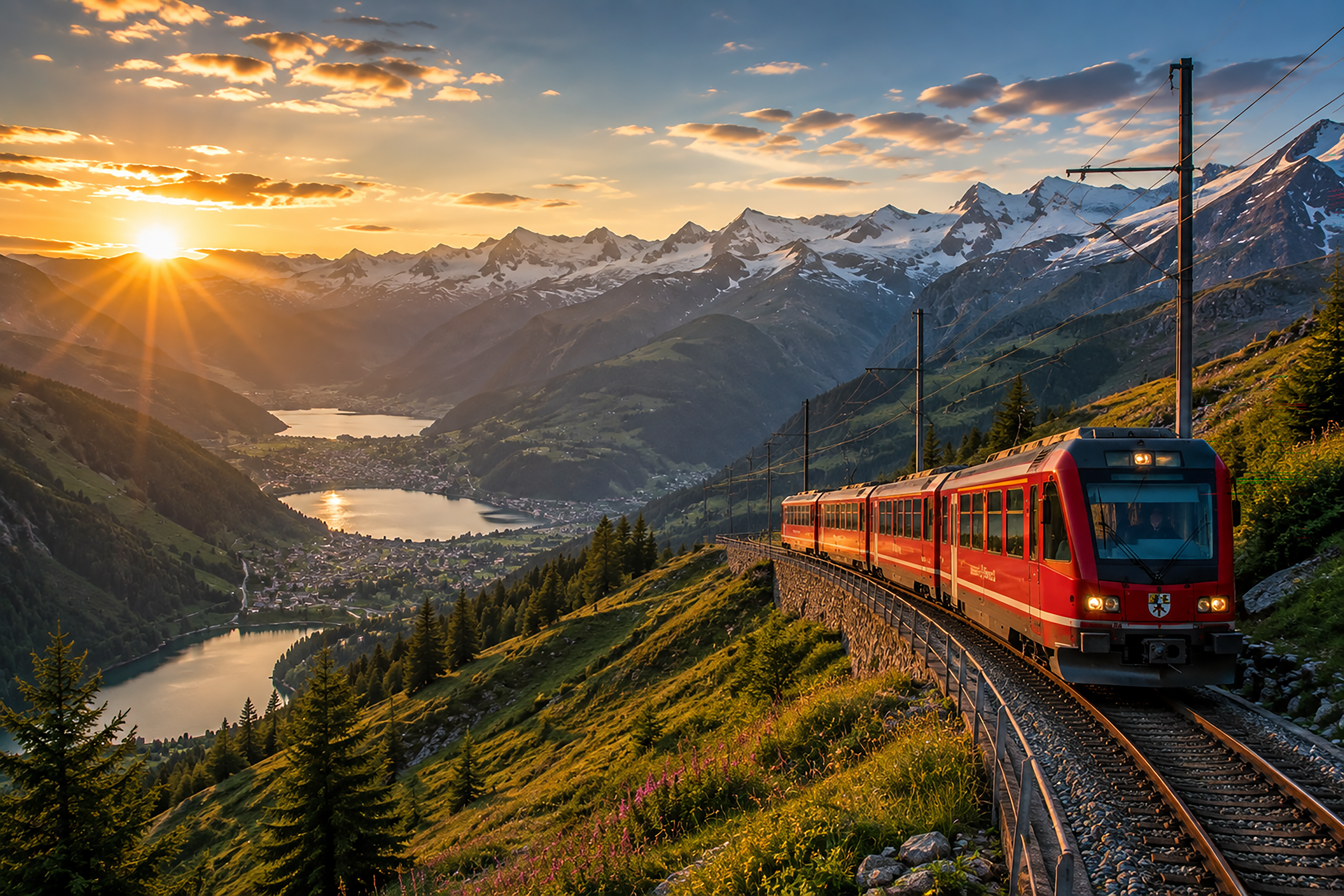
The railway is not simply how you reach Switzerland's landscapes. It is one of the ways Switzerland reveals them. Sit by the window, watch the language on the station signs change, notice how architecture follows elevation, and allow the distance between destinations to become part of the journey.
From the Éto Journal
Read the strategy, context, and travel judgment that shaped this route.
Make It Your Own
Use the Planner to customize the route around your dates, budget, pace, preferences, and travel style.
