Best time to visit
October through April for hiking and outdoor exploration, with March, holiday periods, and spring weekends bringing the greatest crowds
Ideal trip length
3–4 nights, with an optional night in Palm Springs before or after
Climate
Arid desert, with winter nights that can fall below freezing and summer temperatures that frequently exceed 38°C
Region
North America
Overview
A place worth knowing.
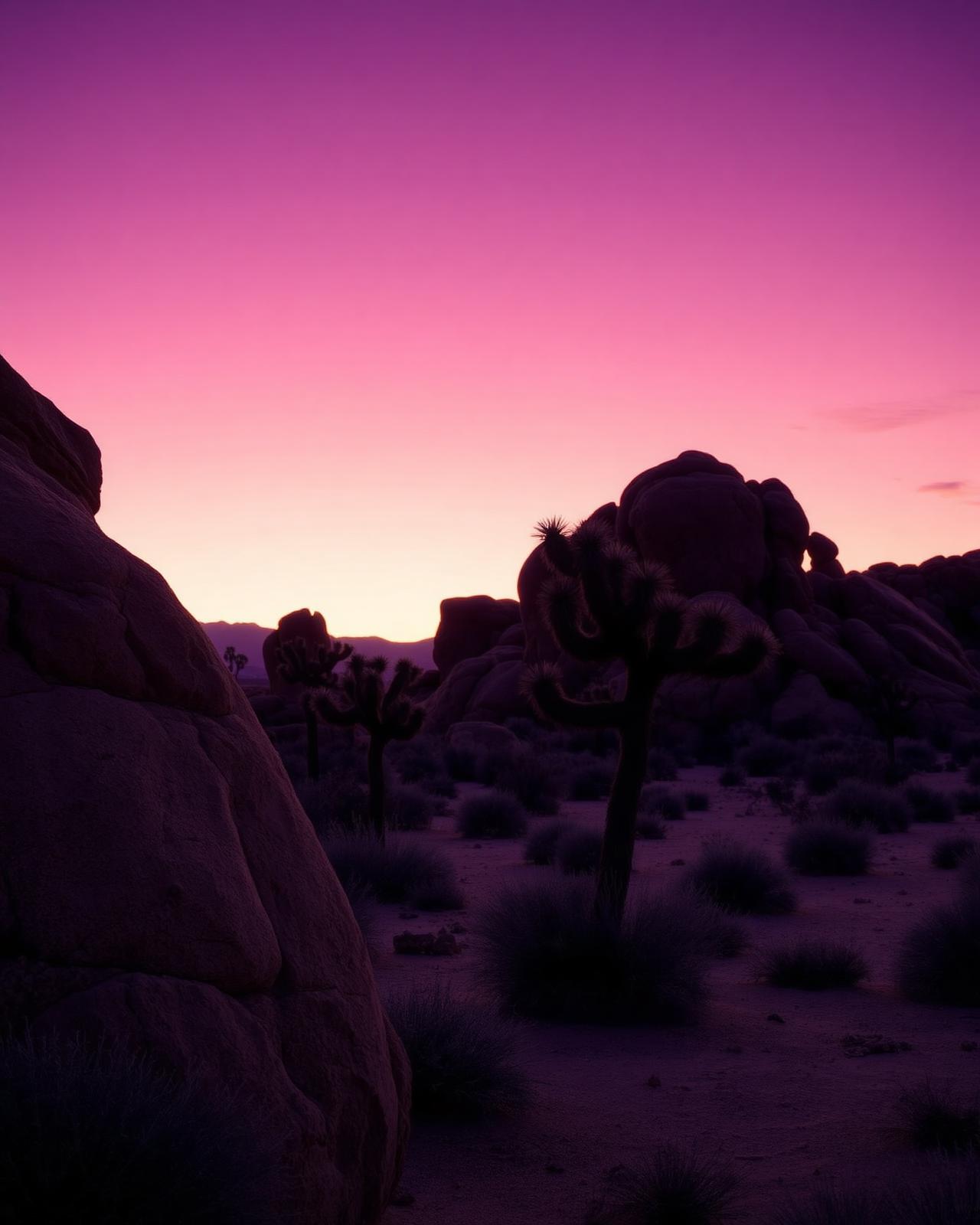
Joshua Tree offers a kind of quiet that is increasingly difficult to find in Southern California. Days revolve around rock formations, desert trails, and long views. Outside the park, small communities support artists, musicians, independent restaurants, and places built for watching the night sky.
Why I recommend this
I recommend Joshua Tree to travelers who want fewer scheduled activities and more time outdoors. Three nights allow for two well-timed park visits, an evening in Pioneertown, and enough unscheduled time to notice how different the desert feels after dark.
Christopher, lead advisor
Sample recommendations for demonstration purposes. Final travel plans should be customized and verified before booking.
When Joshua Tree works
Choose the season that suits the trip.
Each season changes the rhythm of Joshua Tree. The right time depends on the atmosphere, pace, and tradeoffs you want.
Winter
December to February
Cool days support longer hikes and unhurried exploration, while nights can fall below freezing. Winter is excellent for clear skies and active days, but holiday weekends still bring congestion and accommodations should not be left to chance.
Spring
March to May
Spring combines comfortable temperatures, possible wildflowers, climbing weather, and busy weekends. March through mid-April can be especially crowded, so enter early, visit midweek when possible, and reserve lodging or camping ahead.
Summer
June to September
Extreme heat changes what is reasonable. Outdoor activity should be limited to cooler early-morning and evening periods, with midday reserved for rest or indoor stops. A flexible plan and substantial water supply are essential.
Autumn
October to November
Temperatures begin to moderate and the main visitor season returns. Autumn is well suited to hiking, climbing, sunset drives, and stargazing, with November often offering a particularly useful balance of comfortable days and cold nights.
Before you go
The details that shape the trip.
- Arrival
- Palm Springs International Airport is the closest major passenger airport, while Ontario and the Los Angeles airports provide more flight options with longer drives. A car is necessary for moving between gateway towns, trailheads, and park entrances.
- Local transport
- Self-driving is the practical way to experience the park. Fill the tank or charge the vehicle, carry food and water, and download maps before entering. Do not depend on rideshare service or cellular navigation inside the park.
- Payment
- Cards are standard in gateway communities and are used for many park transactions. Purchase a digital entrance pass in advance when useful, but keep a physical payment card available in case mobile service is unavailable.
- Language
- English is the primary language throughout the region, with Spanish also widely spoken across Southern California. Park signs and official visitor information are straightforward, but offline maps remain important.
- Book ahead
- Reserve distinctive desert stays, campgrounds, sound baths, guided climbing, and major Pioneertown performances well ahead for fall through spring. Weekend availability can tighten long before the forecast is known.
Joshua Tree by time
What can you realistically experience?
More time creates more range, but a shorter visit can still feel complete when the geography and priorities are clear.
24 hours
One complete desert day
Enter early for a short trail and the park's central rock formations, rest through the brightest part of the day, then return for sunset and stargazing. One day works when the route remains focused and the overnight base is nearby.
48 hours
The park and its creative edge
Use one day for the national park and another for the high-desert communities, outdoor art, Pioneertown, or a slower morning among the boulders. Two nights create room for both sunrise and the night sky.
72 hours
A desert reset
Three days allow the trip to slow down. Combine two carefully timed park sessions with art, food, a sound experience, or simple time at the lodging. The extra day should reduce movement rather than expand the driving radius.
Where to Stay
Recommended neighborhoods.
Joshua Tree (town)
The most convenient base for the West Entrance, with cafes, small shops, and a broad selection of desert rentals.
Yucca Valley
The practical base for groceries and everyday services, with easy access to restaurants and larger rental properties.
Pioneertown
A former film set with a small high-desert community, live music, and Pappy & Harriet's at its center.
Twentynine Palms
A quieter eastern base near the North Entrance, useful for travelers prioritizing early park access and dark skies.
Hotels
Stays by category.
Budget
Joshua Tree Lake Campground
Joshua Tree
Tent or RV under exceptional dark skies; bring layers.
Mid-Range
Mojave Sands Motel
Joshua Tree
5-room renovated motel; communal courtyard with fire pit.
Boutique
Sacred Sands
Joshua Tree (West Entrance)
Two-suite straw-bale inn with private outdoor showers and unobstructed park views.
Luxury
AutoCamp Joshua Tree
Joshua Tree
Airstream suites with a sleek mid-century clubhouse and pool.
Sample recommendations for demonstration purposes. Final travel plans should be customized and verified before booking.
Top Attractions
- Hidden Valley loop (1 mile, sunset light is best)
- Keys View near sunset for a broad view across the Coachella Valley
- Cholla Cactus Garden at golden hour
- Noah Purifoy Outdoor Desert Art Museum
- Barker Dam loop for desert history, rock formations, and water after sufficient rain
Hidden Gems
- A reserved sound bath inside the Integratron in Landers
- Pappy & Harriet's open mic or live music when listed on the current event calendar
- Giant Rock, approached only by established routes and when current access conditions permit
- The restaurant and bar at 29 Palms Inn, with current dining and music schedules confirmed before visiting
Food Recommendations
- La Copine in Flamingo Heights for seasonal high-desert cooking, with service hours and reservation procedures confirmed for the travel dates
- Kitchen in the Desert in Twentynine Palms for Caribbean and New American food
- Pappy & Harriet's in Pioneertown for classic fare and live music
- Frontier Café in Yucca Valley for breakfast before entering the park
Coffee Recommendations
- Joshua Tree Coffee Company for locally roasted coffee near the West Entrance
- Frontier Café in Yucca Valley for coffee, breakfast, and a shaded patio
Photography Spots
- Keys View near golden hour for layered views across the Coachella Valley
- Cholla Cactus Garden late in the day when low light passes through the spines
- Arch Rock after dark when moonlight and visitor conditions suit astrophotography
- Mane Street in Pioneertown during the softer light before sunset
Cultural Etiquette
- Stay on established trails and surfaces, and never carve, cut, climb, or otherwise damage Joshua trees or other protected park resources.
- Pack out every scrap, including fruit peels and pistachio shells.
- Dim screens and unnecessary lights after dark to protect night vision and the experience of nearby visitors.
- Ask before photographing people in town; many locals value privacy.
Travel Responsibly
Sustainability notes.
The desert is durable in appearance but slow to recover from damage. Stay on established roads and trails, respect closures, and keep noise low near homes and campsites. The communities surrounding the park include longtime residents, artists, conservationists, and people who came for a quieter life.
- Carry a full day's water supply before entering the park because water is not available in its interior.
- Use rechargeable lanterns and dim red lights after dark rather than bright disposable lighting.
- Donate to the Mojave Desert Land Trust for habitat preservation.
A Suggested Itinerary
3 days, considered.
Sample recommendations for demonstration purposes. Final travel plans should be customized and verified before booking.
- 01
Arrive and stargaze
Lodging
Sacred Sands
MorningArrive through Palm Springs and have lunch before driving into the high desert.AfternoonSettle into the lodging, collect food and water, and review current park conditions before entering.EveningWatch sunset from Keys View, then use the designated stargazing area at Cap Rock if conditions are clear. Check the park calendar separately for any ranger-led night program.DiningLa Copine in Flamingo Heights when its seasonal service schedule fits the arrival dayTransportRental car, with high clearance unnecessary for the principal paved park route - 02
Park day
Lodging
Sacred Sands
MorningCholla Cactus Garden near sunrise, followed by Arch Rock and the central rock formations.AfternoonPicnic at Jumbo Rocks, then rest during the brightest and warmest part of the day.EveningWalk the Hidden Valley loop in softer late-afternoon light, then continue to Pioneertown for dinner or a scheduled performance.DiningDinner at Pappy & Harriet's, with restaurant access and concert tickets checked separatelyTransportSelf-drive within the park, with fuel, food, water, and offline maps secured before entering - 03
Art & sound
Lodging
Sacred Sands
MorningVisit the Noah Purifoy Outdoor Desert Art Museum, allowing time to walk the site without rushing.AfternoonSound bath at the Integratron (reserve weeks ahead).EveningSlow dinner at Kitchen in the Desert; final stargaze from the casita patio.DiningDinner at Kitchen in the Desert in Twentynine PalmsTransportSelf-drive
Map-Ready Locations
Pinned on the ground.
Save these locations to your trip board. Each one includes coordinates for Google Maps, Apple Maps, or your preferred itinerary app.
Hike
Hidden Valley Trail
JT National Park
Easy 1-mile loop; great for first afternoon.
34.0117, -116.1664
Viewpoint
Keys View
JT National Park
Arrive 45 min before sunset for parking.
33.9266, -116.1869
Hotel · Boutique
Sacred Sands
Joshua Tree
A two-suite property with limited availability during the cooler months.
34.1158, -116.3417
Restaurant · Music
Pappy & Harriet's
Pioneertown
Check restaurant service and the live-event calendar separately because ticketed performances can change access and parking.
34.1577, -116.4732
Art Site
Noah Purifoy Museum
Joshua Tree
Free, open-air, donation appreciated; no shade.
34.1830, -116.3380
Sample recommendations for demonstration purposes. Final travel plans should be customized and verified before booking.