Best time to visit
Mid-April through June and September through October
Ideal trip length
5–7 nights for a first visit with time beyond the major landmarks
Climate
Oceanic · 5–25°C; bring a light layer year-round
Region
Europe
Overview
A place worth knowing.
Paris becomes easier to understand when each day has a geographic center. A museum in the morning can lead naturally into lunch, a neighborhood walk, and an evening nearby. Choosing a base with places you want to revisit often matters more than fitting every landmark into the schedule.
Why I recommend this
For a first visit, I prefer a neighborhood that works in the morning and evening, not simply one close to a famous monument. The Marais, Saint-Germain, Canal Saint-Martin, and several quieter residential districts can give the trip a familiar daily rhythm while keeping museums and historic areas within reach.
Christopher, lead advisor
Sample recommendations for demonstration purposes. Final travel plans should be customized and verified before booking.
When Paris works
Choose the season that suits the trip.
Each season changes the rhythm of Paris. The right time depends on the atmosphere, pace, and tradeoffs you want.
Spring
March to May
Paris gradually moves outdoors as gardens fill, terraces become livelier, and daylight stretches into the evening. April and May balance atmosphere with comfortable walking weather, though rain and shifting temperatures still reward flexible plans.
Summer
June to August
June offers long evenings and a full cultural calendar. July and August can be hot and busy around major landmarks, while some independent restaurants and shops reduce their hours or close for holidays. Confirm anything central to the trip.
Autumn
September to November
September and October bring cooler walks, the return of the cultural season, and renewed neighborhood energy after summer. Major exhibitions, fashion events, and trade fairs can increase hotel demand on specific dates.
Winter
December to February
Winter is darker and colder, but museums, restaurants, concert halls, and covered passages give the city an intimate rhythm. January and February can offer more space and better hotel value outside major events.
Before you go
The details that shape the trip.
- Arrival
- International travelers usually arrive through Charles de Gaulle or Orly. RER B connects Charles de Gaulle with central Paris, while Metro line 14 serves Orly. Rail travelers from London, Brussels, Amsterdam, and other French cities arrive directly at central stations.
- Local transport
- Walk within neighborhoods and use the Metro or RER for longer crossings. Build each half-day around adjoining arrondissements so transportation supports the day rather than interrupting it. Check live service information before airport transfers.
- Payment
- Cards and contactless payments are widely accepted, but carrying some euros remains useful for small purchases, markets, older machines, and places with minimum card amounts.
- Language
- English is common in major visitor settings, but beginning every interaction with bonjour matters. A few polite French phrases often change the tone of an exchange more than perfect pronunciation.
- Book ahead
- Reserve distinctive hotels, celebrated restaurants, major exhibitions, and timed-entry landmarks well ahead for spring, early summer, and September. Fashion weeks, trade fairs, and major events can tighten availability beyond their immediate venues.
Paris by time
What can you realistically experience?
More time creates more range, but a shorter visit can still feel complete when the geography and priorities are clear.
24 hours
One Paris, not all of Paris
Choose either the Left Bank, the Marais and central islands, or a single neighborhood cluster. Build the day around one museum, one long meal, and an evening walk instead of crossing the city to collect landmarks.
48 hours
Two banks, two rhythms
Use one day for a compact Right Bank route and another for the Left Bank. This creates room for major art, neighborhood streets, cafe time, and the Seine without turning the visit into a transit exercise.
72 hours
The city beyond the icons
Three days allow a central introduction, a deeper neighborhood day, and a third day shaped by personal interests such as food, design, photography, gardens, or smaller museums.
Where to Stay
Recommended neighborhoods.
Le Marais (3e/4e)
Central and highly walkable, with museums, historic streets, restaurants, and considerable visitor activity.
Saint-Germain (6e)
A polished Left Bank base with bookshops, cafes, galleries, and easy walks toward the Seine and Luxembourg Gardens.
Canal Saint-Martin (10e)
A more residential base organized around the canal, with independent restaurants and active evenings near the locks.
Batignolles (17e)
A quieter district with a market, parks, neighborhood restaurants, and fewer major visitor sites at the doorstep.
Hotels
Stays by category.
Budget
Hotel Jeanne d'Arc Le Marais
Marais
Family-run, simple rooms on a quiet pedestrian square.
Mid-Range
Hotel National des Arts et Métiers
Haut Marais
Stylish rooftop bar with Eiffel Tower views; well-priced for the location.
Boutique
Hôtel des Grands Boulevards
2e arrondissement
Experimental Cocktail Club downstairs; killer pastries; intimate rooms.
Luxury
Le Bristol Paris
8e (Faubourg Saint-Honoré)
Old-world service, Eric Frechon's 3-star dining, garden suites.
Sample recommendations for demonstration purposes. Final travel plans should be customized and verified before booking.
Top Attractions
- Musée d'Orsay during its extended Thursday evening hours
- Sainte-Chapelle stained glass at noon
- Musée Picasso, Marais
- Rodin Museum and gardens
- Père Lachaise cemetery walk
Hidden Gems
- Coulée verte René-Dumont for an elevated walk east from Bastille
- Square du Vert-Galant at sunset
- Marché des Enfants Rouges for Saturday lunch
- Musée de la Vie Romantique tea garden
Food Recommendations
- Septime in the 11th arrondissement for a contemporary tasting menu, with reservations released three weeks ahead
- Du Pain et des Idées near Canal Saint-Martin for bread and laminated pastries
- Le Comptoir du Relais near Odéon for traditional bistro cooking served throughout the day
- Clamato in the 11th arrondissement for seafood in a more informal setting
Coffee Recommendations
- Télescope Café in the 1st arrondissement for a focused specialty-coffee stop
- Coutume in the 7th arrondissement for coffee near the Left Bank museums
- Café Kitsuné at Palais Royal for coffee within the garden arcades
- Boot Café in the Marais for a small neighborhood coffee bar with very limited seating
Photography Spots
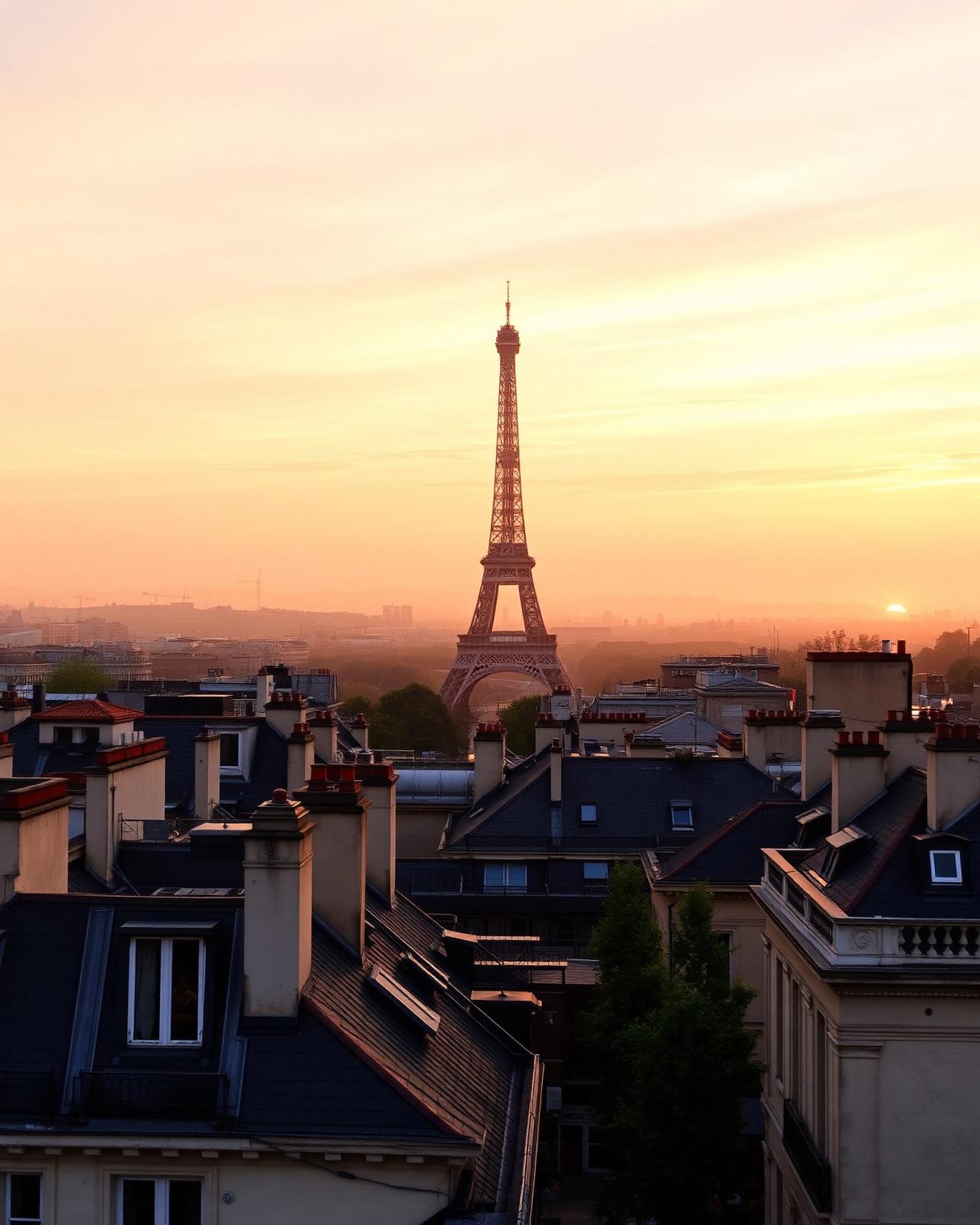
- Trocadéro early in the morning for a clearer view toward the Eiffel Tower
- Pont Alexandre III from the Right Bank as the evening light begins to fade
- The Galeries Lafayette rooftop during public opening hours
- The arcades and gardens of Palais Royal early in the day
Cultural Etiquette
- Say bonjour when entering a small shop or beginning an interaction, and au revoir when leaving.
- Restaurant service is included in the listed price. A small additional amount is optional when service has been especially helpful.
- Wait to be seated unless the setting clearly indicates otherwise.
- Keep voices moderate in small restaurants, residential courtyards, and shared building spaces.
Travel Responsibly
Sustainability notes.
A brief greeting matters in shops, cafes, and restaurants. Begin with bonjour before asking a question or placing an order. Meal times and kitchen hours may be more structured than many visitors expect, so confirm them rather than assuming food is served continuously.
- Use walking, the Metro, buses, and the RER as the default ways to move through the city.
- Use Vélib' only if you are comfortable riding in urban traffic and understand the local cycling routes.
- Consider rail for onward travel to cities such as London, Brussels, and Amsterdam when the schedule makes it practical.
A Suggested Itinerary
3 days, considered.
Sample recommendations for demonstration purposes. Final travel plans should be customized and verified before booking.
- 01
Settle into the Marais
Lodging
Hôtel des Grands Boulevards
MorningTrain from CDG; coffee at Boot Café; check in.AfternoonMusée Picasso, then a slow wander to Place des Vosges.EveningApéro at Candelaria, dinner at Clamato.DiningSeafood and wine at Clamato in the 11th arrondissementTransportRER B from CDG; walking inside the city - 02
Left Bank classics
Lodging
Hôtel des Grands Boulevards
MorningMusée d'Orsay (book 9:30 a.m. slot); coffee at Coutume.AfternoonLuxembourg Gardens lunch picnic from Poilâne.EveningJazz at Le Caveau de la Huchette, dinner at Le Comptoir du Relais.DiningLe Comptoir du RelaisTransportMetro line 4 / walking - 03
Hidden Paris
Lodging
Hôtel des Grands Boulevards
MorningCanal Saint-Martin walk; pastries at Du Pain et des Idées.AfternoonVintage shopping in the Haut Marais; Musée de la Vie Romantique.EveningSunset near Sacré-Cœur, followed by dinner at Le Coq & Fils.DiningLe Coq & Fils: heritage poultry in MontmartreTransportWalking; metro for Montmartre
Map-Ready Locations
Pinned on the ground.
Save these locations to your trip board. Each one includes coordinates for Google Maps, Apple Maps, or your preferred itinerary app.
Museum
Musée d'Orsay
7e
Thursday evenings until 9:45 p.m. are quietest.
48.8600, 2.3266
Hotel · Boutique
Hôtel des Grands Boulevards
2e
Reserve the Experimental cocktail bar in advance.
48.8717, 2.3437
Restaurant
Septime
11e
Reservations open 21 days ahead at 10 a.m. Paris time.
48.8528, 2.3804
Cultural Site
Sainte-Chapelle
1er (Île de la Cité)
Visit at noon for direct sun through the windows.
48.8554, 2.3450
Park
Promenade Plantée
12e
Start at Bastille; walk east for 4.5 km of elevated park.
48.8473, 2.3741
Sample recommendations for demonstration purposes. Final travel plans should be customized and verified before booking.
From the Éto Journal
Go deeper.
Stories, strategies, and ideas connected to this destination.